


Business news
Prepare all conditions for the first batch of sweet potatoes to be exported to China.


In terms of annual production of around 1.2-1.3 million tons, sweet potatoes in Vietnam are abundant in quantity to dominate the Chinese market.
On April 3, the Plant Protection Department received a letter from the General Administration of Customs of China (GACC) announcing the results of the online inspection of Vietnamese sweet potato export enterprises to the Chinese market. Accordingly, 70 sweet potato growing areas and 13 packaging facilities have been licensed.
Nong nghiep Vietnam newspaper had a conversation with Mr. Hoang Trung, Director of the Plant Protection Department, to clarify the upcoming implementation details to make the most of this opportunity.
Many sweet potato fields in Vietnam are about to enter the main harvest season. What is the significance of China granting export licenses to 70 Vietnamese sweet potato growing areas and 13 packaging facilities in promoting and developing this industry chain, sir?
First of all, it must be said that Vietnam and China have cooperated for many years to promote agricultural trade, including signing official memorandums to serve the export of key items.

Minister Hoang Trung calls on stakeholders in the value chain to enhance their sense of responsibility and be proactive in asserting the position of sweet potatoes in export markets.
On November 9, 2022, the Ministry of Agriculture and Rural Development and the General Administration of Customs of China signed another memorandum of understanding on quarantine requirements for sweet potato products. This is an important boost to Vietnam's export turnover to the world's most potential market.
The total area of sweet potato cultivation in the country is currently around 100,000 hectares, with a total output of 1.2-1.3 million tons. It can be affirmed that Vietnam has abundant production to export sweet potatoes.
As the lead agency in guiding procedures, plant quarantine, and negotiating the opening of agricultural markets, the Plant Protection Department has implemented many positive and coordinated solutions immediately after the memorandum was signed. First of all, the Department has coordinated with the General Administration of Customs of China to prepare some conditions to serve export activities, including submitting a list of files on planting areas and sweet potato packaging facilities for China's consideration. At the same time, the Department has held meetings and planned online inspections with qualified units and exporters of sweet potatoes in the near future.
Since March 7, the Plant Protection Department and the General Administration of Customs of China have jointly inspected a series of facilities on the list. By April 3, the General Administration of Customs of China had sent an official letter announcing the results of the online evaluation. Specifically, 13 packaging facilities and 70 planting areas have been granted licenses. This immediately sets urgent requirements as sweet potatoes are about to enter the main crop.
Specifically, it is necessary to accompany, guide and instruct local specialized agencies in disseminating, promoting, and organizing production in a systematic and sustainable manner. This is not an overnight task but needs to be continuously implemented to avoid minor errors that can lead to consequences for the entire industry.
It must be added that in the recent inspection by the General Administration of Customs of China, 10 out of 23 of our packaging facilities did not meet the requirements. This issue needs to be resolved as soon as possible, so that owners and related units can identify the causes and find ways to improve technical dossiers. In this process, the Plant Protection Department will emphasize that if the standards are not met, the goods will immediately be turned back. In addition, violators may be suspended from exporting.
Achieving agreements to export sweet potatoes or any other agricultural products abroad is both an opportunity and a challenge for farmers. In the context of many key export items of the industry having decreasing values compared to previous years, finding new markets and asserting the position of Vietnamese agricultural products in the global market becomes even more urgent.
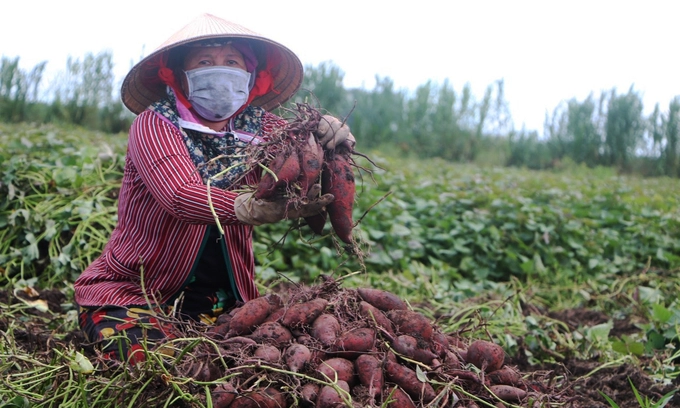
According to the Department of Crop Production, the total area for sweet potato cultivation in Vietnam is currently about 100,000 hectares, with an annual yield of 1.2-1.3 million tons.
Recently, the Ministry of Agriculture and Rural Development issued guidelines for the allocation and management of region codes for crops, with a strong emphasis on local decentralization. For crops with short harvest cycles like sweet potatoes, the Department of Crop Production plans to provide support and guidance to localities to maximize their opportunities.
To ensure sustainable development of the industry, all stakeholders, including government agencies, businesses, industry associations, and producers, must recognize their responsibilities. For localities, introducing another export item will require additional resources, especially technical personnel, to participate in continuous monitoring and supervision.
For businesses, they must support growing areas, cooperatives, and farmers in the supply chain while ensuring compliance with GACC regulations. More than ever, domestic businesses need to establish and develop sustainable links both domestically and internationally. They should sign more long-term contracts, even large contracts with partners, to create long-term demand and help farmers feel secure in their cultivation.
For producers, including direct labor, issues related to business ethics are emphasized. We cannot standardize on paper alone but must concretize through practical actions, such as separating packaged goods from newly imported goods. Even small actions can change the perception of the majority of the population over time.
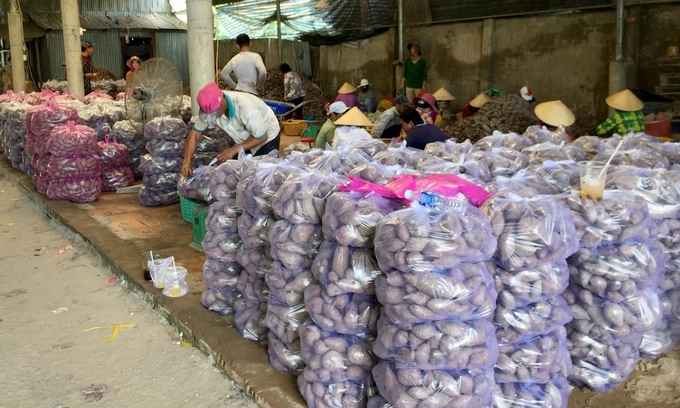
Regarding the Plant Protection Department, we have carefully prepared plans for the day when the first container of sweet potatoes is exported to China. Firstly, the department has sent a notification to localities to proactively provide information to owners of the planting area code and packaging facilities. From there, these facilities will plan and prepare all necessary conditions according to China's requirements to meet the deadline for export within the next month.
Secondly, the department has planned and committed to organize training classes to guide specific conditions for the planting area code as well as some related technical requirements. The target audience of the training is owners of the area code and specialized officials in localities to check, monitor, and work together to fulfill all inspection requirements before taking the goods to the border.
Thirdly, we have transmitted all relevant information about the planting area code and sweet potato packaging facilities to the Plant Protection Inspection Sub-departments and Plant Quarantine Stations to promptly grasp, inspect, and control according to the process that Vietnam has committed in the decree. We must find ways to ensure that fresh sweet potato batches exported to China have full plant quarantine certificates, information about planting areas, packaging facilities, and meet hygiene and food safety requirements as you have requested. Specifically, they must not be contaminated with harmful organisms that China is concerned about.
Fourthly, lively and intuitive forms of propaganda will be built for related subjects with the aim of raising a sense of responsibility, such as export companies only purchasing raw materials from areas that have been granted area codes, or the correct packaging standards for labeling, information accuracy, and traceability. These activities will contribute to helping management agencies reduce inspection time and increase the clearance speed at the border - an extremely important factor when exporting fresh produce.
Fifthly, the Plant Protection Department continues to urge localities to inspect and monitor production in accordance with the actual situation. Afterwards, they send a list for the department to consolidate the demand for area codes and packaging facilities nationwide, creating a foundation before negotiating with the GACC.
-

”The watermelon queen” of China and the cutting-edge breeding technology.
- 05-04-2023
- 58
It is not an exaggeration to say that over 80% of the watermelons and cantaloupes on people’s dining tables every day are the blood, sweat, and tears of Mrs. Ngo and her colleagues over the past 60 years.
-
The 034 Dau Loan avocado variety - the origin of the 034 avocado variety in Vietnam.
- 05-04-2023
- 217
When you visit the 034 Dau Loan avocado garden from Lunar New Year to August on the Lunar calendar, you will have the opportunity to admire the sturdy 034 avocado trees and savor the delicious, creamy and soft texture of this fruit.
-
The Vietnamese rice brand is increasingly asserting its value in the world.
- 25-03-2023
- 56
Vietnamese rice is increasingly being valued and making a strong voice in the world as many Vietnamese rice brands have asserted their reputation and presence on the shelves of many discerning markets.