


Business news
Mexico: The gateway for Vietnam to enter the Latin American market.


Currently, Mexico is Vietnam’s second largest trading partner in the Latin American region, and Vietnam is Mexico’s eighth largest trading partner in the Asian region...
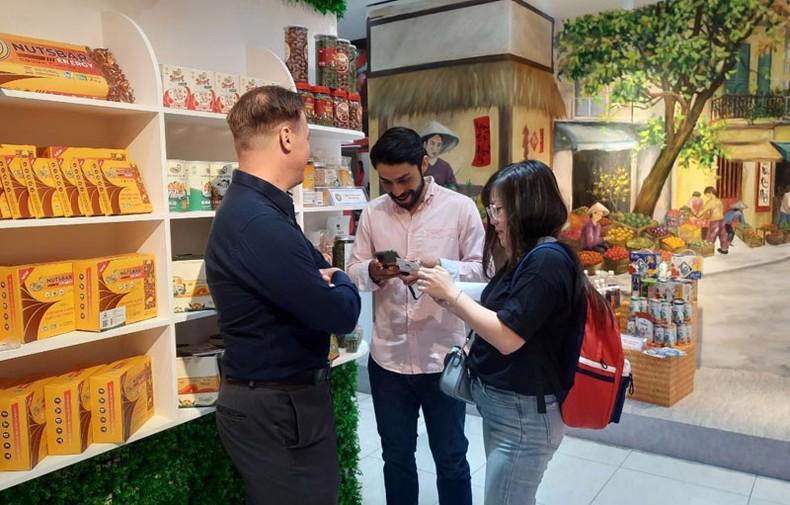
Mexican businesses showcase their products in Ho Chi Minh City.
In recent years, the economic and trade relations between Vietnam and Mexico have been continuously expanding and developing, especially since the Comprehensive and Progressive Agreement for Trans-Pacific Partnership (CPTPP) was signed and took effect from the beginning of 2019.
Vietnam and Mexico have a lot of potential to enhance their trade cooperation, particularly in high-tech energy, telecommunications, agriculture, and industries with high added value.
This information was shared by delegates at the workshop "Promoting Vietnam-Mexico Trade Cooperation" organized by the Ho Chi Minh City Investment and Trade Promotion Center (ITPC) in collaboration with the Mexican Embassy and Consulate General in Ho Chi Minh City on March 23, 2023.
According to statistics from the General Department of Vietnam Customs, in 2022, the bilateral trade turnover increased positively, reaching over 5.42 billion USD, up 7% compared to 2021; of which Vietnam's exports to Mexico are estimated to reach over 4.53 billion USD.
According to Ms. Cao Thi Phi Van, Deputy Director of ITPC, as a dynamic and developing economy, Mexico is gradually becoming an attractive market for the world, including Vietnam. Meanwhile, Vietnam is also becoming a new market that Mexican businesses are increasingly interested in.
The trade relations between Ho Chi Minh City and Mexico reached 364 million USD in 2022; of which, Ho Chi Minh City exported over 300 million USD to Mexico (achieving a trade surplus), up 6% compared to 2021.
Mr. Alejandro Negrin Munoz, Mexican Ambassador to Vietnam, shared that Vietnam is also a very dynamic market and highly valued by Mexico in the Asian region. The commodities that the two countries often trade are integrated circuits, mobile phones, machine parts and components, automobiles, leather, cotton, and more.
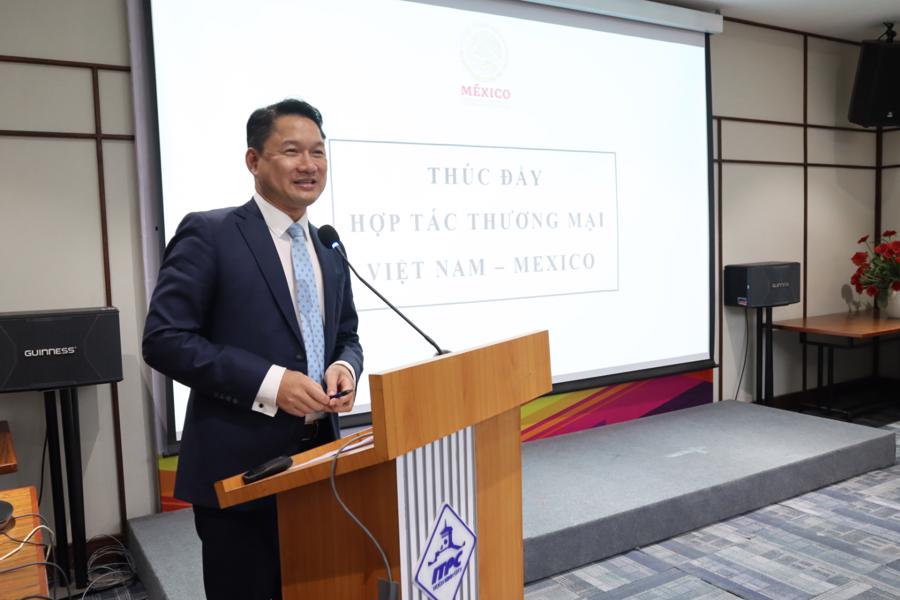
"The current exchange value does not correspond to the market scale and potential that each party has. Therefore, it can be affirmed that there is still great potential for trade cooperation between Vietnam and Mexico, which needs to be effectively exploited and balanced," said Mr. Alejandro Negrin Munoz.
Mr. Vu Minh Anh, Honorary Consul of the Consulate of Mexico in Ho Chi Minh City, believes that besides direct investment, Vietnamese businesses should "change their mindset towards global supply chains." Instead of investing heavily in direct investment, businesses can find Mexican partners to establish joint ventures and leverage each other's strengths to produce goods and services for demanding markets.
According to Ms. Vo Thi Phuong Lan, Vice Chairman of the Ho Chi Minh City Logistics Association (HLA), Mexico, located between the Atlantic and Asia-Pacific regions, with its long coastline, is very favorable for trade and transportation of goods by sea.
With the advantage of both being members of the CPTPP, Mexico has committed to eliminate 77% of tariff lines immediately, equivalent to 36.5% of Vietnam's imports, and will eliminate tariffs on 98% of tariff lines in the tenth year of the agreement's effectiveness.
As a result, Vietnam's exports to Mexico, such as seafood, coffee, rubber, phones and components, and auto parts, have recently seen a significant increase in growth ranging from 27-65%. Conversely, Mexico is also gradually promoting the export of beef, pork, agricultural products, and beverages to Vietnam.
Poland further stated that in order to achieve economic efficiency in goods trade, businesses need to optimize logistics costs by using integrated logistics services such as customs declaration, domestic transportation, international transportation, warehousing, etc. At the same time, optimizing transportation, using imported containers to pack export goods can help businesses reduce 50% of domestic transportation costs and save time, thereby improving production capacity.
Mexico is located in North America and also belongs to Latin America with over 11,000 km of coastline and over 3,000 km of border with the United States. Mexico is the 7th largest exporter in the world and the largest in Latin America. In 2022, Mexico maintained its position as the main supplier of vehicles and agricultural products to the United States, as well as the second largest supplier of machinery and electronic equipment to the United States.
Mexico is the world's largest Spanish-speaking country with over 126 million people, among the top 15 largest economies in the world with a GDP scale of USD 1,370 billion in 2022. Mexico is a member of the G20, a group of countries representing 90% of the world's economy and 80% of its trade.
Regarding integration, Mexico has a network of 14 Free Trade Agreements with 50 countries, including the Comprehensive and Progressive Agreement for Trans-Pacific Partnership (CPTPP) of which Vietnam is a member, and 30 investment promotion and protection agreements. Mexico is part of the North American market and a gateway to over 500 million consumers. Estimates for 2023 indicate that the size of the regional market will reach USD 28,550 billion, accounting for 25% of global GDP in the future.
-

Prepare all conditions for the first batch of sweet potatoes to be exported to China.
- 05-04-2023
- 66
In terms of annual production of around 1.2-1.3 million tons, sweet potatoes in Vietnam are abundant in quantity to dominate the Chinese market.
-

”The watermelon queen” of China and the cutting-edge breeding technology.
- 05-04-2023
- 58
It is not an exaggeration to say that over 80% of the watermelons and cantaloupes on people’s dining tables every day are the blood, sweat, and tears of Mrs. Ngo and her colleagues over the past 60 years.
-
The 034 Dau Loan avocado variety - the origin of the 034 avocado variety in Vietnam.
- 05-04-2023
- 217
When you visit the 034 Dau Loan avocado garden from Lunar New Year to August on the Lunar calendar, you will have the opportunity to admire the sturdy 034 avocado trees and savor the delicious, creamy and soft texture of this fruit.